CareersLife Insurance Agent Jobs
Life Insurance Agent Jobs in Grand Prairie
You'll talk by phone and video with people who requested details about life insurance, lay out their choices and guide them through applying. Pay is commission, the week runs 50-plus hours, and our coaching continues after your first sale closes, not just before it.

What the job actually is
A life insurance agent here does three things over and over: contacts people who requested information, runs a needs conversation that works out how much protection they want and what they can afford, and takes the application through underwriting until the policy is issued. All of that happens on a laptop and a phone from home, so agents in Grand Prairie, Arlington and Irving work the same way.
The contract is commission-based. There is no hourly rate and no base salary, which is why we explain how commission, advances and chargebacks work before you sign anything. Roles like this are typically 1099 independent-contractor agreements, and we go through the exact terms of yours on the call.
Where we differ is what happens after a sale closes. A policy is not finished when the client says yes. It has to clear underwriting, get delivered and stay in force through the early months. We check back with you on every new case, show you how to keep clients informed through that stretch and point out the ones that need a follow-up call, because a lapsed policy costs you money later.
What we give a new agent
- A Texas licensing walk-through
- We lay out the order of steps: the state life exam through Pearson VUE, the IdentoGO fingerprint check and the TDI application. You study and pay your own licensing costs; we keep you moving so nothing stalls between steps. The Life Insurance Licensing Help page has the full detail.
- Training and one-on-one mentorship
- Product training, call scripts and the reasoning behind each part of the script, so you can adapt instead of reading. Free Agent Training & Mentorship covers the program in full.
- Leads the agency pays for
- You don't spend your own money buying leads. Every name comes from someone who asked to hear about life insurance, so each call opens with their request instead of a cold pitch.
- Daily coaching and recorded call reviews
- A mentor listens to your calls and marks the exact moment a conversation turned: a missed question, a rushed price, an objection left hanging. Fixing one specific habit at a time is faster than general advice.
- Check-ins after your first cases
- Once you start closing, we track each new policy with you through underwriting, delivery and the first months in force. You learn which client calls keep a policy active and which warning signs mean a policy might lapse.
Is the agent role right for you
You'll commit 50-plus hours weekly
Commission follows conversations, and conversations need hours on the phone. New agents who run this as a full schedule pick up skill fast. People squeezing it around other obligations usually fall behind.
You want coaching, even when it stings
Call reviews mean someone hears your mistakes. People who take the note and try it on the next call improve; people who argue with it tend to stall.
You're ready to earn your Texas license
Selling requires a Texas life agent license, and the state sets 18 as the minimum age. No experience needed, since we teach you from zero.
This is not a salaried job
If you need a fixed paycheck every two weeks while you learn, this contract will feel risky. Pay comes from policies that are issued and stay in force.
It is not a side gig
A few evening hours a week won't produce enough appointments to learn the work or earn from it. If you want your first real career and can commit to it, this is built for that.
From your first call to your first appointment
- 1
Career interview by phone
We talk through your schedule, your goals and how the contract is set up, and you ask whatever you want about pay, leads or hours. Both sides leave the call knowing whether it's a fit.
- 2
Pass the Texas life exam
You book the state life exam through Pearson VUE. Texas doesn't require a prelicensing course for the life license, but we strongly recommend exam prep and help you map out your study time.
- 3
Fingerprints and your TDI file
You start your record in TDI's fingerprint portal, then visit IdentoGO for the prints that feed the state background check. After that, you file your resident life agent application using Sircon or NIPR. We walk you through each screen by phone or video so the state doesn't send it back for a missing detail.
- 4
Training and contracting
While TDI reviews your application, you learn the products, the needs conversation and the application software. Once your license is issued, you complete carrier contracting so you can start writing business.
- 5
First appointments on agency-paid leads
You begin working requests while a mentor reviews your early calls. When your first cases close, we track them with you through issue and delivery.
What moves an agent's income and costs
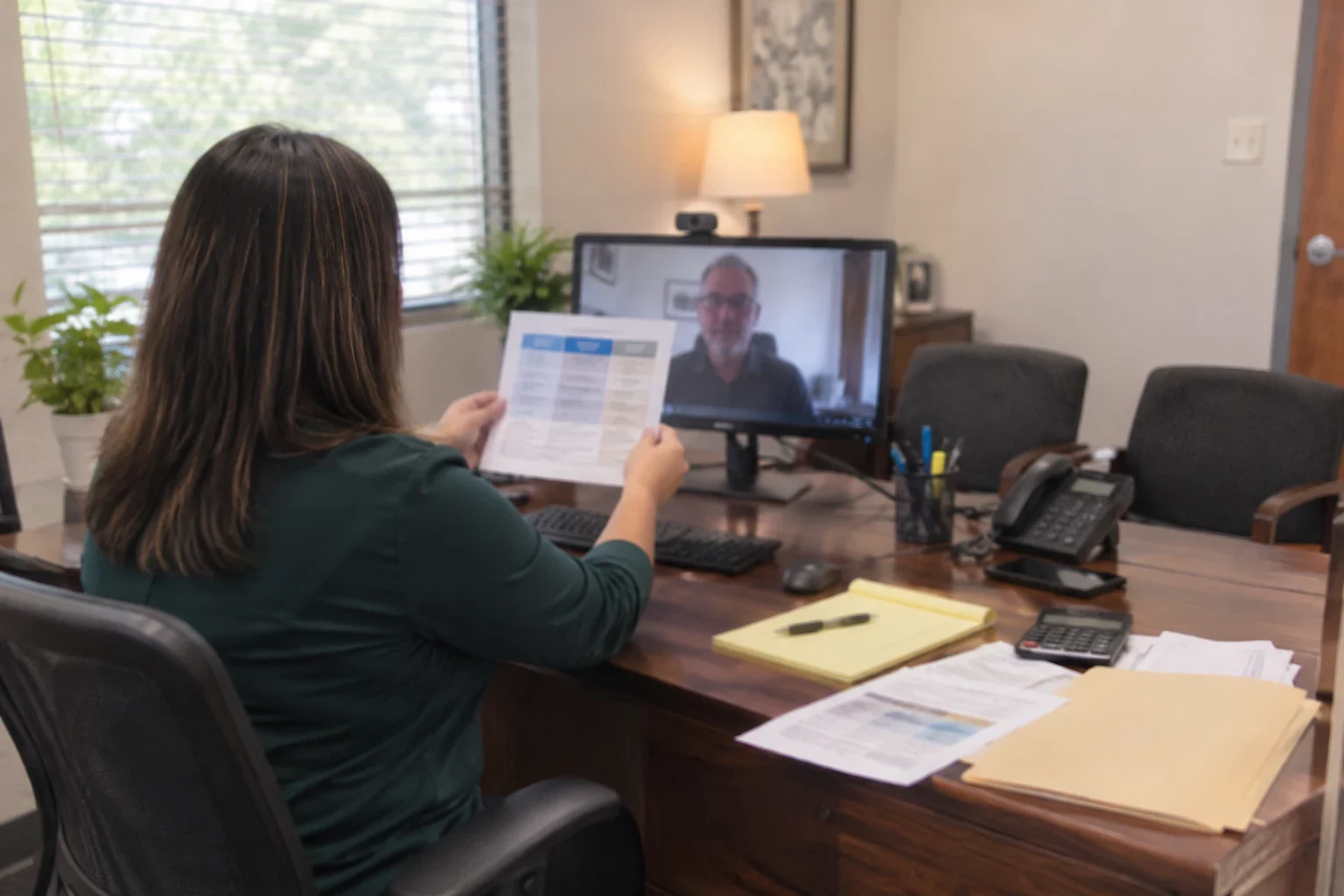
We won't quote you a number, because no honest agency can. Your take-home comes from the hours you put in, how well you run a conversation and the people you reach, less your expenses and any chargebacks. Results vary widely between agents and none are typical or guaranteed, so read the Earnings Disclaimer page before anything else.
- Hours on the phone
- More dials mean more booked appointments, and every appointment is a real shot at an issued policy. New agents who protect their calling blocks from interruptions tend to see it in their numbers first.
- How you run the conversation
- Your close rate rises as you learn to uncover why someone requested information in the first place. That skill is what recorded call reviews are built to sharpen.
- Lead quality and speed to contact
- A person you reach minutes after their request responds very differently from one you call days later. How fast and how consistently you follow up sets your contact rate.
- Commission, advances and chargebacks
- Commission is earned when a policy is issued. If a contract pays an advance, part of that commission arrives early, and a lapse in the first months can mean the unearned share is taken back. How Agents Get Paid explains the mechanics step by step.
- Expenses you carry
- Plan for the exam fee, fingerprinting, the TDI application, E&O insurance, a reliable laptop, a phone and a headset. These come out of your earnings, so track them from day one.
Questions about the agent role
Something not covered here? (972) 440-4938
What does a typical day look like for a new agent?
Most days open with a brief coaching huddle, followed by focused blocks of calling new requests and working follow-ups. Appointments by phone or video fill the afternoon and evening, since that is when most people pick up. Before signing off, you log your notes and check where each pending application stands.
Will I be on payroll, or am I a 1099 contractor?
Expect a 1099 independent-contractor contract, which is the usual setup for this kind of agent work. Nothing is withheld from your checks and there is no base pay, so you cover your own taxes and should set a share of every commission aside. The specific terms of your contract are something we review together during the career interview.
How many hours a week do agents work?
Plan on 50 or more. That number includes calling, appointments, coaching and admin. We say it up front because it's what the work takes, and people who expect fewer hours tend to be disappointed.
What happens on the career interview call?
We explain the role, the contract, how leads are handled and what training looks like. We ask about your availability and why you want this career. Bring your questions about pay; it's the right time to ask them.
How much does licensing cost, and who pays?
The candidate normally covers licensing: the exam fee, fingerprinting and the $50 TDI resident life agent application. We take you through each step in order so a missed field or wrong form doesn't cost you a second fee.
Find out if the agent role fits you
A career interview is the quickest way to hear how the contract, the hours and the coaching actually work. Have your questions about pay and leads ready.